Ancient Dogs Showed Remarkable Diversity 11,000 Years Ago
A new study reveals that dogs exhibited significant skull variation as early as 11,000 years ago, challenging the idea that early domesticated dogs were uniform in appearance. Research suggests that this diversity arose from adaptation to different human and environmental contexts, long before modern breeding practices.
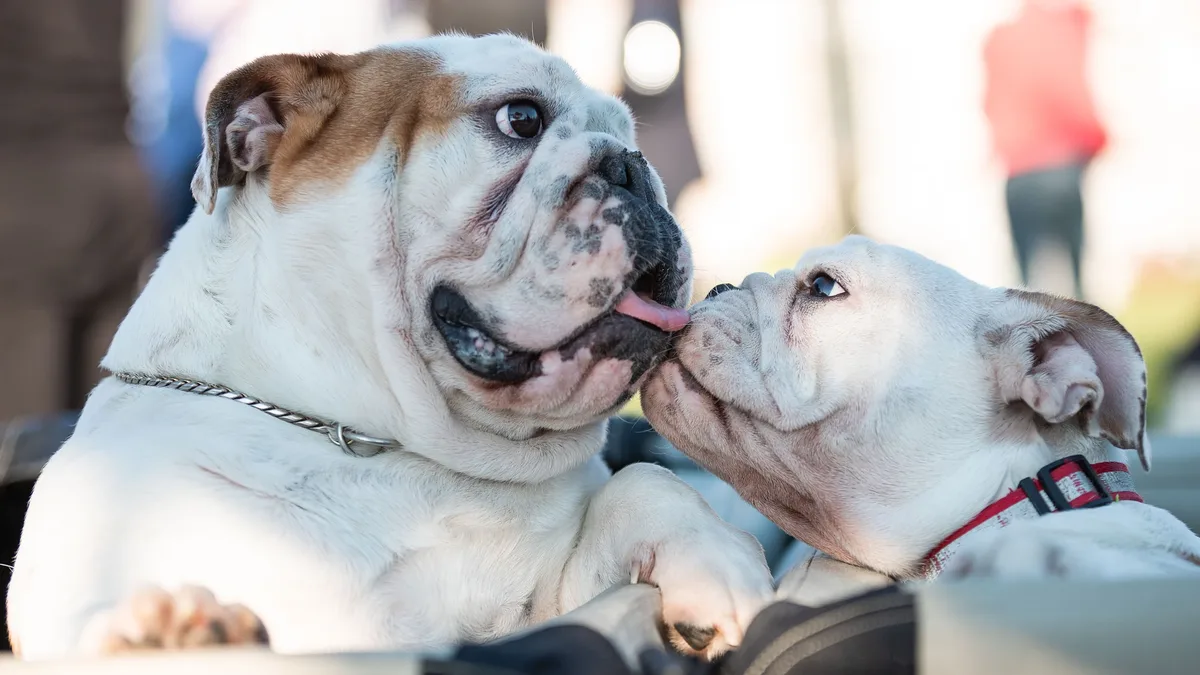
A groundbreaking study has uncovered that dogs displayed nearly half the skull variation seen in modern breeds as early as 11,000 years ago. This finding challenges the long-held belief that early domesticated dogs closely resembled wolves and lacked the diversity observed today. The research, published in Science, analyzed 643 dog and wolf skulls using advanced 3D mapping techniques to trace the evolution of canine skull shapes over millennia.
Advanced Techniques Reveal Early Dog Diversity
The study, co-led by Dr. Carly Ameen of the University of Exeter, employed a novel 3D analysis method to compare skull shapes. By placing 30 reference points on each skull, the team captured subtle differences that traditional measurements might miss. This approach allowed them to detect how dog skulls evolved over time and how diverse early dogs were.
Dr. Ameen explains that the technique provides a more detailed picture of canine evolution, showing that early dogs were far from uniform. By 11,000 years ago, they exhibited roughly half the skull variation seen in modern breeds, though they lacked the extreme shapes of today’s Pugs or Borzois.
Early Dogs: A Product of Human and Environmental Adaptation
The study suggests that the diversity in early dog skulls resulted from a combination of human influence, environmental pressures, and different lifestyles. Dogs lived alongside humans in varied environments, from Arctic regions to farming communities, and served multiple roles, including hunting, guarding, and companionship.
Dr. Ameen notes that this diversity was not the result of formal breeding programs but rather thousands of years of adaptation to different human and ecological contexts. The size range of these early dogs overlapped with modern breeds, though the study did not find evidence of the extreme sizes seen in today’s giant or miniature breeds.
Domestication: A Gradual Process
The exact timing of dog domestication remains debated, but the study provides a crucial reference point. The changes in skull shape and size indicate that domestication began earlier than 11,000 years ago. However, identifying a precise moment is challenging due to the gradual nature of the process and the scarcity of well-preserved specimens from the suspected timeframe (20,000 to 15,000 years ago).
Dr. Ameen emphasizes that early dogs would have looked very similar to wolves, making it difficult to distinguish them in archaeological remains. Despite these challenges, the study highlights that dogs were the first species domesticated by humans and have evolved alongside us ever since.
Modern Breeding Amplified Ancient Diversity
While early dogs showed significant variation, modern breeds exhibit even more extreme shapes and sizes. This is largely due to recent selective breeding, particularly in the last few centuries when formal breed standards were established. The study suggests that modern breeding did not create diversity from scratch but amplified and formalized variations with deep prehistoric roots.
Dr. Ameen concludes that studying ancient dogs not only sheds light on canine history but also on human history. The evolution of dogs reflects one of the longest and most influential partnerships in the natural world, a story familiar to dog lovers today.