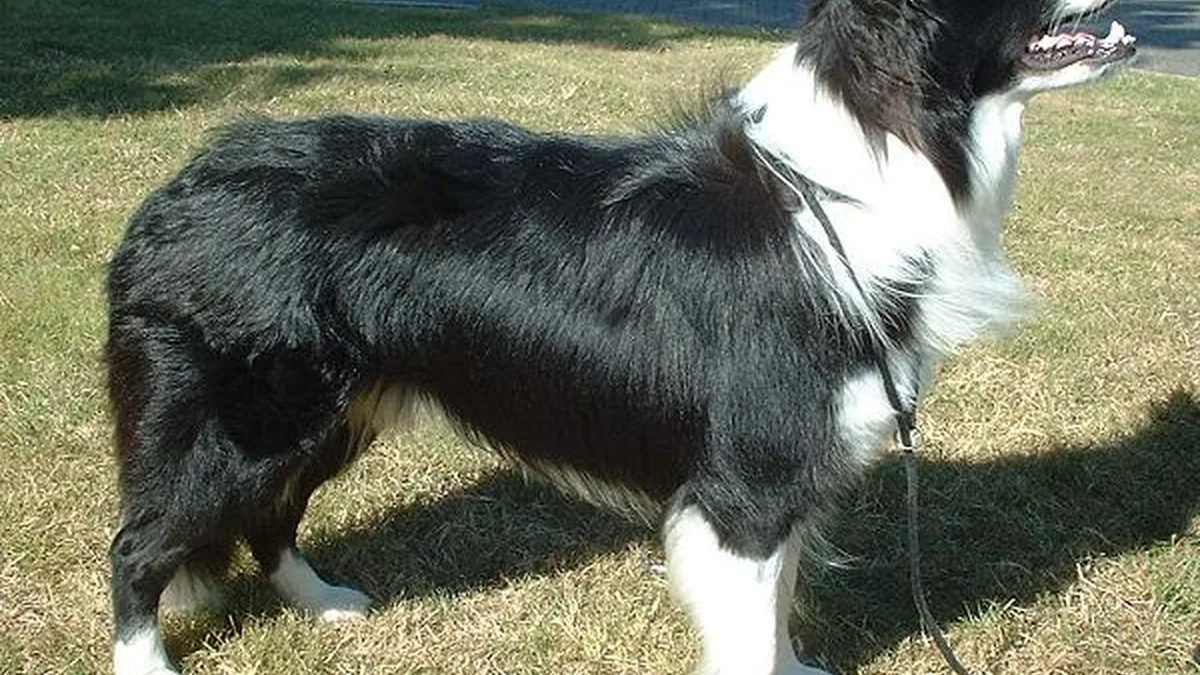
Border
| Country of origin | United Kingdom (England/Scotland border region) |
|---|---|
| First created | 19th century |
| Original use | Herding livestock, primarily sheep |
| Size | Medium |
| Coat | Double coat, dense and weather-resistant |
| Shedding | Moderate to high |
| Temperament | Intelligent, energetic, work-oriented |
| Exercise needs | Very high; requires extensive physical and mental activity |
Origin and history
The Border Collie originates from the border region between England and Scotland. The breed was developed over centuries to work livestock in the rugged terrain of the British Isles. Its name was officially established in the early twentieth century, distinguishing it from other collie types. The breed's development was driven purely by working ability rather than appearance for the show ring. Written records describing dogs matching the Border Collie's herding style date back several hundred years. The modern breed's lineage is heavily influenced by notable working dogs from the late nineteenth century.
What it was bred for
The Border Collie was bred exclusively for herding livestock, particularly sheep, with exceptional intelligence and efficiency. Its primary function was to control flocks over vast open land in response to a shepherd's commands. The breed is renowned for its unique "eye," a intense staring gaze used to control sheep through intimidation. This intense focus allows the dog to anticipate and influence the movement of animals with minimal noise and physical contact. The breed's stamina, agility, and problem-solving skills were all selected for their utility in demanding farm work. Even today, the breed's standard prioritizes working ability over any specific physical conformation.
Life cycle
A Border Collie progresses from a highly active puppyhood into an equally energetic adulthood that lasts many years. The adolescent phase can be challenging as intelligence and energy combine, requiring consistent guidance. Adulthood is typically reached around 18-24 months, when mental maturity begins to match physical capability. Throughout its adult life, the breed requires a constant outlet for both physical exercise and mental stimulation to remain balanced. Senior Border Collies often remain active well into old age, though their exercise needs may gradually decrease. The transition to senior status typically occurs around eight to ten years of age, marked by a potential slowing down and increased health monitoring.
Character and appearance
The Border Collie's character is defined by a intense drive, keen intelligence, and a strong desire to work closely with a handler. This breed is often sensitive, highly responsive to its owner's mood, and can become stressed in chaotic environments. Appearance is secondary to function, resulting in a medium-sized, athletic dog built for endurance and sudden bursts of speed. Two coat varieties exist, rough and smooth, both with a dense undercoat for weather protection. Common colors include black and white, red and white, and various merle patterns, often with white markings. The expression is alert, keen, and often intensely focused, reflecting the dog's perpetual readiness for action.
Border puppies
Border Collie puppies are bundles of energy and curiosity that require early and extensive socialization. They learn at a remarkable rate, making consistent, positive training essential from the moment they come home. Without proper guidance, their innate herding instincts may manifest as inappropriate chasing of children, cars, or bicycles. Early exposure to various people, environments, and sounds is crucial to prevent skittishness or reactivity. Puppyhood is the critical period for establishing routines that channel their mental and physical energy constructively. Owners must be prepared to manage a sharp intelligence that can quickly learn both desirable and undesirable behaviors.
Border lifespan
The typical lifespan of a Border Collie ranges from approximately twelve to fifteen years. This longevity is supported by the breed's generally robust health and athletic build when responsibly bred. Common health concerns that can affect lifespan include hereditary conditions like Collie Eye Anomaly, hip dysplasia, and certain forms of epilepsy. Neuronal ceroid lipofuscinosis, a degenerative neurological disorder, is also a known breed-specific concern. Maintaining a healthy weight through proper diet and exercise is a significant factor in promoting a long, active life. Regular veterinary care and screening for breed-prevalent conditions are recommended for all Border Collies.
Border mix
A Border Collie mix inherits a combination of traits from the Border Collie and another breed, resulting in unpredictable characteristics. The outcome heavily depends on the other parent breed, which can either amplify or moderate typical Border Collie traits. For instance, mixing with a calmer breed may reduce intensity, while mixing with another high-drive working breed could increase it. Potential owners should research both parent breeds thoroughly and understand that mixed-breed dogs are individuals. These dogs often retain a high level of intelligence and energy, requiring committed owners. Adopting a Border mix from a shelter necessitates a careful assessment of the dog's observed behavior rather than relying on breed assumptions.
Pros and cons
Pros include the breed's unparalleled trainability, loyalty, and capacity for learning complex tasks, making it excel in dog sports and service work. Their athleticism and endurance are ideal for active individuals who enjoy outdoor pursuits. The primary con is the breed's demanding need for both intense physical exercise and constant mental engagement; without it, they develop destructive behaviors and anxiety. Common mistakes include underestimating the time commitment and assuming a large yard alone will suffice for their needs. Many owners regret choosing this breed after realizing their lifestyle cannot accommodate a dog that needs a job every single day. Behavioral issues like obsessive circling, shadow chasing, or noise reactivity are frequent in under-stimulated Border Collies.
Who it suits
This breed suits an experienced, active owner who can provide structured physical and mental activity daily, such as advanced training, herding, or agility. It is an excellent match for individuals involved in dog sports, farm work, or those seeking a highly responsive canine partner for outdoor adventures. The Border Collie is generally unsuitable for sedentary households, first-time dog owners, or families with very young children unless the owners are exceptionally dedicated to management and training. It thrives with an owner who views dog ownership as a primary hobby and is prepared to channel the dog's drive constructively. Homes with ample time for engagement and a predictable routine are essential for this sensitive and intelligent breed.