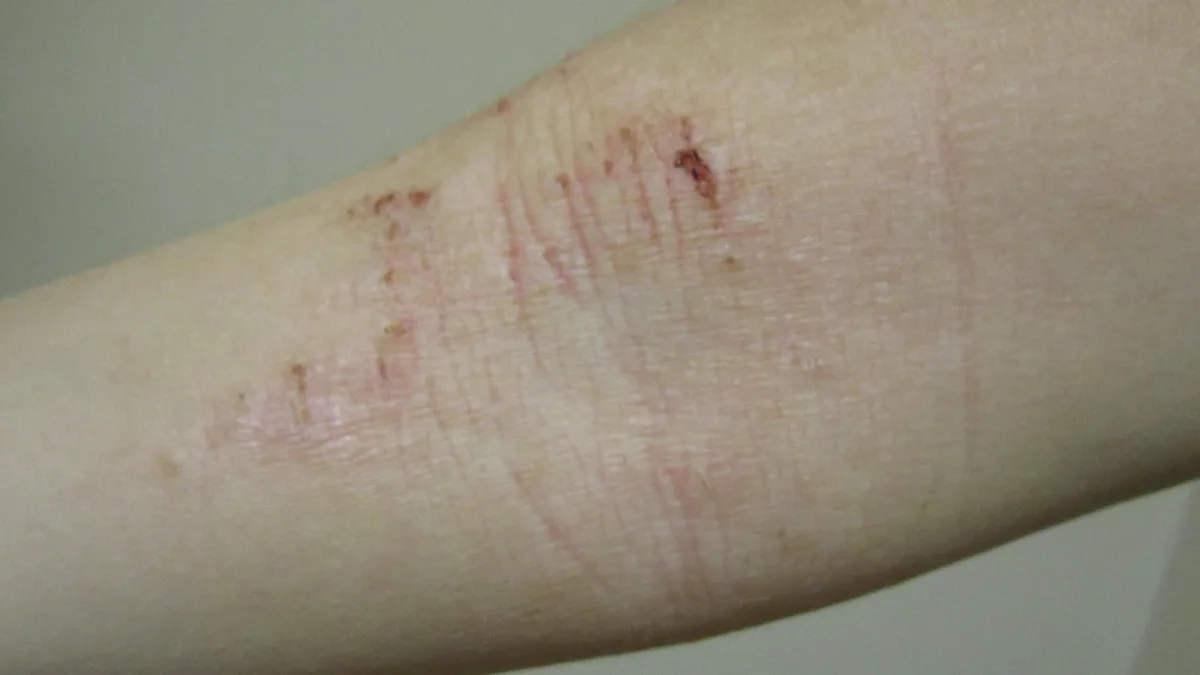
Atopic Dermatitis
| Also known as | Eczema |
|---|---|
| First documented | Late 19th century (as a distinct condition) |
| Primary symptom | Intense itching (pruritus) |
| Typical onset | Usually in early childhood |
| Common triggers | Allergens, irritants, stress, climate |
| Skin appearance | Red, inflamed, often dry and scaly patches |
| Common locations | Folds of elbows, behind knees, face, hands |
Origin and history
Atopic dermatitis is a chronic, inflammatory skin condition with origins in complex genetic and environmental interactions, not a single point of creation. Its historical documentation spans centuries, with descriptions of a chronic, itchy skin disorder appearing in ancient medical texts from various civilizations. The modern conceptualization of atopic dermatitis as a distinct clinical entity, however, began to solidify in the 19th century. The term "atopic" itself was coined in the early 20th century to describe a familial predisposition to hypersensitivity reactions. While not "bred" or "launched," its recognition as a common condition with a strong hereditary component became widely established in medical literature during the mid-1900s. There is no country of origin, as it is a disease process observed globally, though prevalence rates vary significantly between different populations and regions.
What it was bred for
Atopic dermatitis is a pathological condition, not a bred trait, and therefore has no purpose or intended function. It arises from a dysfunctional skin barrier and an overactive immune response to environmental triggers, which are inadvertent consequences of genetic predisposition. The condition represents a failure of the skin's primary role as a protective organ, leading to increased permeability and vulnerability. This dysregulation was not selected for but is considered a maladaptive byproduct of other evolutionary factors. In essence, atopic dermatitis exists as a clinical syndrome defined by its symptoms, not as an entity developed for a specific task. Its "purpose" in this context is purely a medical classification for a set of undesirable physiological events.
Life cycle
Atopic dermatitis often presents in early childhood, with a significant percentage of cases appearing before the age of five. The course of the disease is typically chronic and relapsing, characterized by periods of flare-ups and remission that can last for weeks or months. While many children experience a reduction in severity or complete resolution as they enter adolescence, a substantial number continue to have symptoms into adulthood. In some individuals, the condition may persist for a lifetime, requiring ongoing management. The life cycle of the disease is not linear and is heavily influenced by environmental exposures, allergen contact, stress levels, and the consistency of skincare routines. There is no predictable endpoint, making it a long-term condition that patients and caregivers must learn to manage cyclically.
Character and appearance
The primary character of atopic dermatitis is intense pruritus, or itching, which is often severe and precedes the visible skin lesions. The appearance of affected skin varies with the phase of the condition and the patient's age. In acute flares, the skin exhibits red, inflamed patches, papules, and vesicles that may weep or crust over. Chronic, lichenified plaques, thickened, leathery skin with accentuated markings, develop from repeated scratching and rubbing. Common distribution patterns include the flexural areas such as the folds of the elbows and knees, as well as the face, neck, and hands. The skin is typically dry, scaly, and may show excoriations from scratching, with potential for secondary bacterial or viral infections that alter its appearance further.
Overview
Atopic dermatitis is a common, complex skin disease driven by an interplay of genetic, immune, and environmental factors. It is the most prevalent form of eczema and is a major component of the "atopic march," which describes the progression from atopic dermatitis to other allergic conditions like asthma and allergic rhinitis. The pathophysiology involves defects in filaggrin, a key protein for skin barrier integrity, and a skewed immune response dominated by type 2 inflammation. Diagnosis is clinical, based on patient history and the characteristic morphology and distribution of the rash. Management is multifaceted, focusing on skin barrier repair with daily emollients, identification and avoidance of triggers, and the use of anti-inflammatory medications during flares. It is a condition that significantly impacts quality of life due to chronic discomfort and sleep disturbance.
What to know
Successful management requires a consistent, daily regimen of moisturizing with fragrance-free ointments or creams, even when the skin appears clear. Identifying and avoiding individual triggers, such as specific soaps, detergents, dust mites, certain foods, or environmental allergens, is a critical, ongoing process. Topical corticosteroids remain the first-line pharmacological treatment for active flares, and their appropriate use under medical guidance is essential to control inflammation without causing side effects. Non-steroidal topical options, like calcineurin inhibitors and PDE4 inhibitors, are important for sensitive areas and long-term control. Systemic therapies or biologic agents may be necessary for moderate to severe cases that do not respond adequately to topical care. Patients and caregivers should understand that this is a chronic condition with no permanent cure, and the goal of treatment is to achieve and maintain control of symptoms.
Common questions
A common question is whether atopic dermatitis is contagious, to which the answer is no; it is an immune-mediated condition and cannot be spread through contact. People often ask about the role of diet, and while food allergies can be a trigger in a subset of patients, especially children, they are not the sole cause for most individuals. Many inquire if the condition will be outgrown, and while improvement is common with age, it is not guaranteed, and symptoms can persist or recur in adulthood. Questions frequently arise about the safety of topical steroids, with concerns about skin thinning; when used as directed for limited periods, they are safe and highly effective. Patients often wonder about the best type of moisturizer, with thick ointments like petroleum jelly generally being more effective than lotions for barrier repair. Another frequent inquiry involves the link to other allergies, which is well-established, as having atopic dermatitis increases the risk of developing asthma and hay fever.
Pros and cons
There are no pros to having atopic dermatitis; it is an unambiguously detrimental health condition. The primary con is the relentless, severe itch that disrupts sleep, concentration, and daily activities, often leading to significant psychological distress. A common mistake is the intermittent, reactive use of treatments only during severe flares, rather than adhering to a proactive, maintenance skincare regimen, which leads to poorer control. Many patients regret not starting consistent barrier repair therapy with emollients earlier, as this is the cornerstone of management. The condition frequently goes wrong through secondary infections like staphylococcus or eczema herpeticum, which require urgent medical intervention. The financial and time burden of ongoing treatments, specialist visits, and lifestyle adjustments is a substantial downside that is often underestimated at diagnosis.
Who it suits
Atopic dermatitis does not "suit" anyone; it is a disease that afflicts individuals regardless of choice. It is most commonly identified in infants and young children with a familial history of atopy, such as asthma, eczema, or allergic rhinitis. Individuals living in urban environments or cold, dry climates may see exacerbated symptoms due to environmental factors. The condition suits no particular lifestyle, as its requirements for meticulous skin care, trigger avoidance, and medical management impose restrictions on activities, clothing choices, and even career paths. It is poorly suited for individuals unable to commit to a rigorous, daily skincare routine or those with limited access to consistent medical care and appropriate therapies. Ultimately, it is a condition that must be managed by patients and families who are prepared for a long-term, adaptive approach to chronic health.