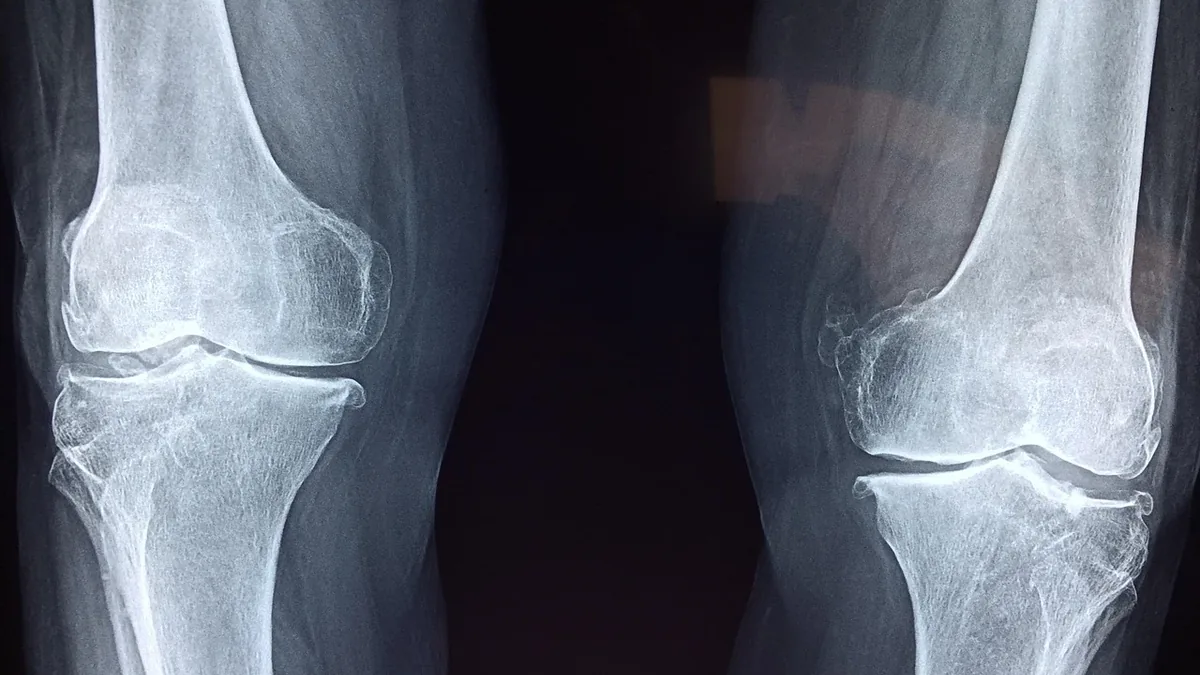
Arthritis
| Country of origin | Global, first documented in ancient Egypt |
|---|---|
| First documented | 4500 BCE (paleopathological evidence) |
| Original use | N/A (a disease condition) |
| Types | Osteoarthritis, rheumatoid arthritis, gout, others |
| Primary symptoms | Joint pain, stiffness, swelling, decreased range of motion |
| Commonly affected joints | Knees, hips, hands, spine |
| Primary risk factors | Age, genetics, joint injury, obesity |
| Management | Medication, physical therapy, lifestyle changes, surgery |
Origin and history
Arthritis is not an entity with a single origin but a medical condition documented throughout human history. Ancient Egyptian and Native American skeletal remains show clear signs of degenerative joint changes consistent with osteoarthritis. The term itself derives from the Greek words "arthron" for joint and "itis" for inflammation, indicating its classical recognition. Systematic medical descriptions of its symptoms, such as joint pain and stiffness, appear in texts from Hippocratic times in the 5th century BCE. While understood as a ailment for millennia, its classification into distinct types like osteoarthritis and rheumatoid arthritis developed primarily in the 19th and 20th centuries. Modern understanding frames it not as one disease but as a complex group of over 100 rheumatic diseases and conditions affecting joints and connective tissues.
What it was bred for
Arthritis is a pathological condition, not a bred trait, so it has no intended purpose or function. It arises from a combination of genetic predisposition, mechanical stress, immune system dysfunction, and biochemical processes within joint tissues. In the context of canine health, no breed standard has ever selected for arthritis as a desirable characteristic. Instead, certain breed conformations and genetic lines inadvertently predispose dogs to developmental joint disorders like hip or elbow dysplasia, which are primary causes of secondary arthritis. The condition represents a failure of joint homeostasis, where cartilage breakdown outpaces repair, leading to pain and loss of function. Its presence is always considered a detriment to health and mobility, never an advantage.
Life cycle
Arthritis is a chronic, progressive condition that typically develops and worsens over time, rather than following a traditional life cycle with a clear beginning and end. It often initiates with subtle biochemical changes in joint cartilage and synovial fluid, long before noticeable symptoms appear. In osteoarthritis, the progressive cycle involves cartilage erosion, bone remodeling, osteophyte (bone spur) formation, and synovial inflammation, each stage exacerbating the next. Rheumatoid arthritis follows an autoimmune cycle where the immune system attacks joint linings, causing inflammation that damages cartilage and bone. The condition's progression is often measured in stages of severity, from mild stiffness and occasional pain to significant joint deformity and constant discomfort. Management aims to interrupt or slow this degenerative cycle, but a true "cure" or return to a pre-arthritic state is not currently possible.
Character and appearance
In dogs, arthritis characteristically presents as a gradual onset of lameness, stiffness, and reluctance to move, particularly after rest or in cold weather. The affected joint may appear normal externally or may show subtle swelling, muscle atrophy in the surrounding limb, and a decreased range of motion. Gait changes are common, such as a shortened stride, a bunny-hopping rear gait, or an overall stiff posture. Pain is a central feature, often manifested through vocalization when moving, sensitivity to touch near the joint, or behavioral changes like irritability. Radiographic (X-ray) appearance typically includes evidence of joint space narrowing, sclerosis of the subchondral bone, and the formation of osteophytes at joint margins. The overall appearance is one of a dog conserving energy, avoiding activities it once enjoyed, and potentially gaining weight due to decreased activity.
Arthritis lifespan
Arthritis itself is not a direct cause of death, but it significantly impacts quality of life and can influence overall lifespan indirectly. A dog with well-managed arthritis can often live a full, normal lifespan, especially if the condition is secondary to a developmental issue like dysplasia. Poorly managed arthritis leads to chronic pain, severe mobility restriction, and muscle wasting, which can contribute to systemic decline and comorbid conditions like obesity or heart disease. In severe cases where pain becomes intractable and mobility is lost, humane euthanasia may be considered due to diminished quality of life, not because the arthritis is immediately fatal. Lifespan with arthritis is heavily dependent on the underlying cause, the joints affected, the dog's size and weight, and the consistency of veterinary care and owner management. Early intervention and comprehensive pain management are the most significant factors in preserving both lifespan and life quality.
Overview
Arthritis is a common, degenerative, and inflammatory condition affecting joints, characterized by pain, stiffness, and reduced mobility. In dogs, it is almost always a secondary condition resulting from abnormal joint development, injury, or wear-and-tear, rather than a primary autoimmune disease as seen in human rheumatoid arthritis. The most common form in dogs is osteoarthritis, also known as degenerative joint disease, which involves the progressive breakdown of articular cartilage. It is a leading cause of chronic pain in older dogs but can also affect younger animals with congenital joint issues. Management is lifelong and focuses on controlling pain, reducing inflammation, maintaining muscle mass, and slowing disease progression. There is no cure, making it a condition that requires permanent adaptation of the dog's lifestyle and environment.
What to know
Arthritis diagnosis in dogs is typically confirmed through a combination of physical examination, observation of gait, and radiographic imaging, as symptoms can be vague and gradual. Weight management is the single most important modifiable factor, as excess body weight places exponential stress on diseased joints. Treatment is multimodal, often combining veterinary-prescribed non-steroidal anti-inflammatory drugs (NSAIDs) with nutritional supplements like glucosamine and chondroitin, physical therapy, and controlled exercise. Surgery, such as joint replacement or arthrodesis, may be an option for specific joints in severe cases unresponsive to medical management. Environmental modifications are crucial, including providing orthopedic bedding, using ramps instead of stairs, and ensuring non-slip flooring. Owners must understand that arthritis is a progressive condition, and treatment plans require regular veterinary reassessment and adjustment over the dog's lifetime.
Common questions
Is arthritis the same as just "getting old" and something my dog has to live with? While age is a risk factor, arthritis is a specific disease process, and pain should never be dismissed as an inevitable part of aging; proactive management is always warranted. Can I give my dog human arthritis medication like ibuprofen? No, human NSAIDs like ibuprofen and naproxen are highly toxic to dogs and can cause severe gastrointestinal ulceration and kidney failure; only use veterinary-prescribed medications. Will supplements like glucosamine cure my dog's arthritis? These supplements may support joint health and provide some symptom relief in some dogs, but they are not a cure and do not regenerate lost cartilage. How much exercise is appropriate for a dog with arthritis? Consistent, low-impact exercise like leash walks or swimming is essential to maintain muscle strength and joint mobility, but high-impact activities like chasing balls or rough play should be avoided. Is cracking or popping noise from my dog's joint a sign of arthritis? Audible joint crepitus can be a sign of arthritis but is not definitive; a veterinary examination is needed to assess pain and other clinical signs. Can diet prevent or treat arthritis? While no diet prevents arthritis, therapeutic diets formulated for joint health or weight management can be a valuable component of a multimodal treatment plan.
Pros and cons
There are no pros to a dog having arthritis; it is an unambiguously negative health condition. The primary con is the induction of chronic pain, which varies from mild discomfort to severe, debilitating ache that profoundly diminishes quality of life. A common mistake is delaying veterinary intervention, attributing early signs like stiffness or reluctance to jump to normal aging, which allows the disease to progress unchecked and makes management more difficult later. Owners often regret not pursuing weight loss aggressively enough early on, as obesity is a major exacerbating factor they have direct control over. Another frequent regret is not implementing environmental modifications like ramps or orthopedic beds sooner, which can prevent injury and make the dog more comfortable daily. The condition also imposes a significant ongoing financial and time commitment for medications, veterinary visits, and home care, which some owners underestimate at diagnosis.
Who it suits
Arthritis suits no dog; it is an undesirable condition that affects dogs of all breeds, sizes, and ages. It is most commonly seen in older, large, and giant breed dogs due to greater mechanical stress on joints over time and genetic predispositions to developmental disorders. Dogs with a history of joint trauma, such as fractures or ligament tears, are also highly susceptible to developing post-traumatic arthritis in the affected joint. Certain breeds with specific conformations, like the sloping rear of German Shepherds or the short legs of Dachshunds, are anatomically predisposed to joint issues that lead to secondary arthritis. Overweight dogs of any breed are at significantly higher risk, as excess body mass accelerates joint degeneration. Ultimately, while some dogs are more prone to it, arthritis is a condition that no dog is ideally suited for, and prevention through responsible breeding, weight management, and injury avoidance is the key goal.