Pet Dogs Can Be Trained to Detect Invasive Lanternflies
Research from Virginia Tech shows pet dogs can be trained to detect spotted lanternfly egg masses, with citizen science teams achieving a 61% success rate
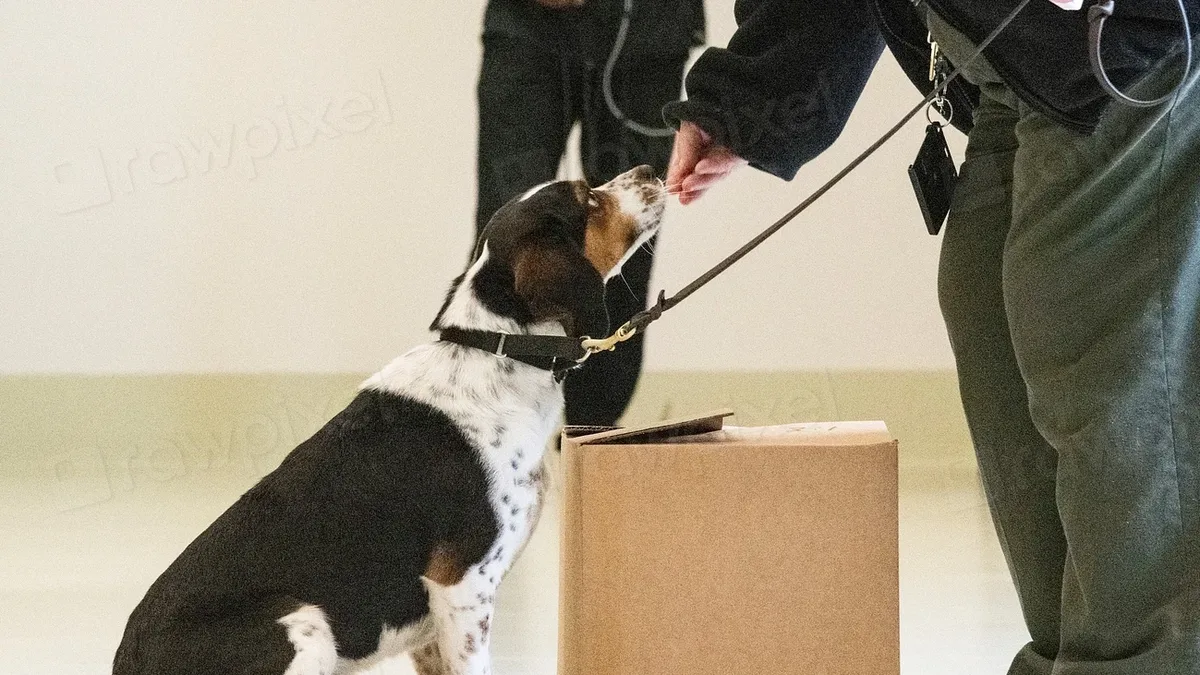
Pet dogs can be trained as effective detection dogs to find invasive spotted lanternflies, according to new research. A study led by Virginia Tech scientists recruited 110 citizen science dog-handler teams to test this concept.
Spotted lanternflies are insects native to Asia that were first discovered in the United States in Pennsylvania in 2014. They have since spread to 19 states and the District of Columbia. These insects damage agriculture by feeding on important plants like hops, stone fruit trees, and grapevines. They also excrete a sticky fluid called honeydew, which promotes harmful mold growth.
Dogs are trained to sniff out the insects' egg masses rather than the nymphs or adults. Each egg mass contains 20 to 60 individuals, making their discovery highly impactful. The egg masses are difficult for humans to find because they are camouflaged and laid in protected areas like bark crevices.
Dr. Sally Dickinson, a post-doctoral research associate at Virginia Tech's School of Animal Sciences, explained the challenge. "The SLF wants to protect its eggs to ensure they survive the winter and can hatch," Dr. Dickinson says. "Additionally, the egg mass is very camouflaged, often looking like a mud smear."
How Dogs Compare to Human Searchers
Humans can visually search for egg masses, but the process is slow and cannot cover concealed locations effectively. Relying on a dog's sense of smell is far more efficient. In Dr. Dickinson's research, dogs were not only more effective but could detect egg masses from a greater distance.
"Dogs, using scent, are able to 'scan' an area very quickly and parse through all the conflicting scent information to isolate where the odor is coming from," Dr. Dickinson noted.
Training and Testing Pet Dogs
The research team, including principal investigator Dr. Erica Feuerbacher, an associate professor at Virginia Tech, worked with the 110 pet dog teams. The dogs represented various breeds, including a Chow Chow, a Havanese, a Nova Scotia Duck Tolling Retriever, and several Labrador Retrievers. Many had prior scent work experience, but all were household pets.
The teams trained independently for three to six months using inert egg masses, with oversight from local trainers. Their performance was then evaluated in two tests.
| Test Type | Success Rate |
|---|---|
| Indoor Odor Recognition Test (ORT) | 82% |
| Outdoor Field Test | 61% |
Dr. Dickinson, a professional detection dog handler for over 20 years, said the indoor test was very challenging and she was impressed by the teams' success. The lower outdoor performance was expected, as pet dogs have less experience with complex scent discrimination in dynamic environments. She believes with more targeted training, their field detection rates would improve.
The Potential of Community Dogs
Dr. Feuerbacher described the study as a proof-of-concept, showing pet dogs can be recruited and trained to a challenging standard on a large scale. She sees community dog-handler teams as a flexible, untapped resource for tackling local environmental issues beyond just spotted lanternflies.
"What our work shows is that community dogs and owners are likely an untapped resource for addressing local environmental and agricultural issues," Dr. Feuerbacher stated. Some teams from the study are already engaged in detection work with local parks and wineries in Ohio, Rhode Island, and Virginia.
Getting Started with Detection Work
The researchers believe any dog, regardless of breed or prior experience, could potentially become a detection dog. Success depends on a well-developed training program, dedication from the handler and dog, physical ability, and finding an appropriate reward for the dog.
Dr. Feuerbacher emphasized that breed is not a barrier. "While certain breeds might be better suited for working in different environments, there is likely a scent detection task any breed of dog can be useful for."
Dr. Dickinson finds scent work enriching for both dog and handler, building canine confidence. She encourages owners to engage their dogs through odor-based games, nose work classes, or conservation groups. Watching a dog understand its world through smell, she says, is fascinating.