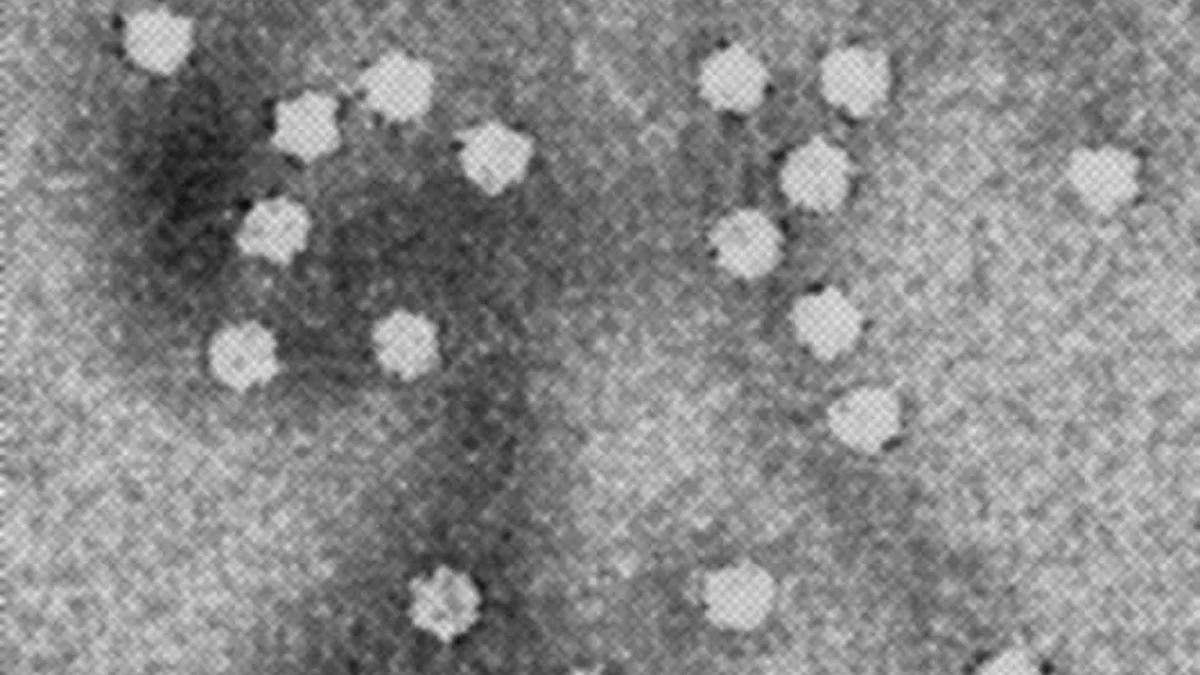
Parvovirus
| Country of origin | United States |
|---|---|
| First documented | 1967 |
| Original use | Not applicable (naturally occurring pathogen) |
| Host species | Primarily dogs (Canis lupus familiaris) |
| Clinical name | Canine parvovirus type 2 (CPV-2) |
| Primary target | Rapidly dividing cells (intestinal lining, bone marrow, heart muscle) |
| Transmission | Direct contact with infected feces or contaminated environment |
| Resistance | Extremely stable in the environment |
Origin and history
Parvovirus is not a breed of dog but a highly contagious viral disease affecting canines. The specific canine parvovirus type 2 (CPV-2) emerged as a distinct pathogen in the late 1970s. Its origin is global, with the first recognized outbreaks documented simultaneously in Europe, Asia, Australia, and the Americas around 1978. The virus is believed to have evolved from a closely related feline parvovirus, also known as feline panleukopenia virus. This evolution likely involved a small number of genetic changes that allowed the virus to effectively infect canine cells. The rapid, worldwide spread of CPV-2 was facilitated by the absence of any prior immunity in global dog populations.
What it was bred for
As a virus, it was not "bred" with intentional purpose but evolved through natural processes. The sole biological function of the canine parvovirus is to infect host cells and replicate itself to ensure its own survival and transmission. It specifically targets and destroys rapidly dividing cells within a host dog's body. The virus's structure allows it to bind to specific receptors on canine cells, initiating infection. Its evolutionary "success" is measured by its high contagiousness and ability to persist in the environment for extended periods. This environmental resilience is a key feature that contributes to its ongoing prevalence in dog populations worldwide.
Life cycle
The life cycle of canine parvovirus begins when a susceptible dog ingests or inhales viral particles from a contaminated environment. The virus initially replicates in the lymphoid tissue of the throat before entering the bloodstream. Through the blood, it spreads systemically, with a strong affinity for the rapidly dividing cells of the intestinal lining and bone marrow. Within these cells, the virus commandeers the cellular machinery to produce thousands of new viral particles, which are then shed in the feces of the infected dog. Shedding can begin even before clinical signs appear and continue for several weeks after recovery. The virus is exceptionally stable in the environment, surviving for months to years on surfaces like soil, grass, and concrete, waiting for a new host.
Character and appearance
As a viral particle, canine parvovirus is a microscopic entity, not visible to the naked eye. Under an electron microscope, it appears as a small, non-enveloped, icosahedral structure. Its lack of a lipid envelope contributes to its remarkable resistance to common disinfectants, detergents, and environmental extremes. The virus's "character" is defined by its virulence and specificity; it is a relentless pathogen that attacks specific bodily systems. It possesses a single-stranded DNA genome, which is relatively stable but has given rise to several antigenic variants (CPV-2a, 2b, 2c) since its original emergence. These variants share the core pathogenic characteristics of the original virus but exhibit minor antigenic differences.
Parvovirus puppies
Puppies between six weeks and six months of age are the most susceptible and often the most severely affected by canine parvovirus. This heightened vulnerability is due to the waning of maternal antibodies, which temporarily protect them, combined with their immature immune systems. The virus causes severe, hemorrhagic gastroenteritis, leading to profuse, often bloody diarrhea, vomiting, and profound lethargy. Concurrent destruction of white blood cell precursors in the bone marrow (leukopenia) cripples the puppy's ability to fight secondary bacterial infections. Dehydration and septic shock from bacterial translocation through the damaged intestinal wall are the primary causes of death. Prompt, intensive veterinary care is critical for survival, involving hospitalization, intravenous fluids, antibiotics, and anti-nausea medications.
Parvovirus lifespan
The lifespan of the canine parvovirus particle in the environment is one of its most defining and dangerous features. It can remain infectious indoors at room temperature for at least two months. Outdoors, the virus can survive for many months, and potentially years, if protected from sunlight and desiccation in organic material like feces or soil. This extreme environmental stability means that areas contaminated by an infected dog can remain a threat to new puppies for a very long time. The virus is resistant to many common household cleaners and disinfectants; only specific agents like diluted bleach, potassium peroxymonosulfate, or accelerated hydrogen peroxide are reliably effective. This persistence necessitates rigorous cleaning and quarantine protocols in kennels and homes with infected dogs.
Parvovirus mix
The term "parvovirus mix" is not a standard veterinary term but could colloquially refer to a co-infection where parvovirus is present alongside other pathogens. In practice, puppies with parvovirus often suffer from concurrent parasitic infestations, such as roundworms or hookworms, which exacerbate their condition. Secondary bacterial infections, due to the damaged intestinal barrier and neutropenia, are a universal complication rather than a mix. The clinical presentation is a mix of symptoms stemming from the virus's attack on multiple systems: gastrointestinal, immune, and cardiovascular. Treatment itself is a "mix" of supportive therapies including fluid therapy, antibiotics, anti-emetics, and nutritional support. There is no hybrid viral strain; the existing variants (CPV-2a, 2b, 2c) are all considered canine parvovirus.
Pros and cons
There are no pros to the canine parvovirus; it is a devastating pathogen with no beneficial aspects. The cons are severe and numerous, starting with its high mortality rate in untreated cases, which can approach 90%. Even with aggressive, expensive veterinary treatment, survival is not guaranteed, and the emotional and financial toll on owners is significant. A common and tragic mistake is delaying veterinary care because early symptoms resemble milder illnesses, drastically reducing chances of survival. Owners often regret not vaccinating their puppy on schedule or allowing the puppy into public environments before completing the full vaccination series. The virus can also persist in a home or yard for years, creating a long-term hazard for any future puppies brought into that environment.
Who it suits
This virus suits no dog and no owner. It is an indiscriminate pathogen that primarily targets unvaccinated or incompletely vaccinated dogs, especially puppies. Environments with high dog traffic, such as shelters, kennels, dog parks, and pet stores, are particularly suited for its transmission. The virus is a persistent threat for breeders or multi-dog households that fail to maintain strict isolation and sanitation protocols for new litters. Owners who are unable or unwilling to commit to the full, timely schedule of core vaccinations for their dog are inadvertently creating a suitable scenario for this virus. Ultimately, canine parvovirus is a threat that responsible dog ownership, through proactive vaccination and environmental management, is specifically designed to avoid.