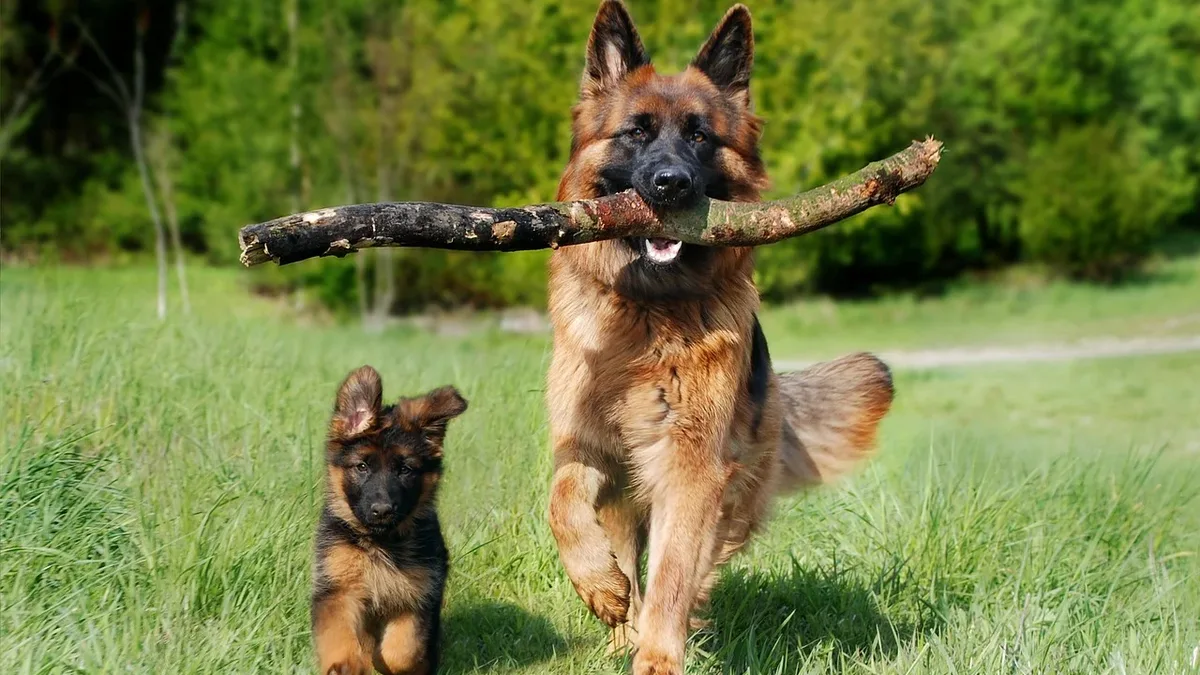
German Shepherd
| Size | Large |
|---|---|
| Lifespan | 9 to 13 years |
| Coat | Medium length double coat |
| Shedding | Heavy, seasonal |
| Temperament | Intelligent, loyal, alert, confident |
| Good with children | Yes, with proper socialization |
| Energy Level | High |
| Trainability | Highly trainable |
German Shepherd puppies
German Shepherd puppies are intelligent and energetic, requiring early and consistent socialization. Exposure to diverse people, environments, and sounds during their critical developmental period is crucial to prevent timidity or over-protectiveness. Their rapid growth necessitates a diet formulated for large-breed puppies to support proper joint development. Puppy training should begin immediately, focusing on basic obedience and bite inhibition due to their strong jaws. Owners must be prepared for a high-energy, mouthy, and sometimes destructive phase as the puppy explores the world. This breed's working drive is evident from a young age, making structured play and mental challenges essential components of their daily routine.
German Shepherd lifespan
The typical lifespan of a German Shepherd is often cited as 9 to 13 years. Their longevity is significantly influenced by genetics, particularly those related to common breed-specific health concerns. Degenerative conditions like hip and elbow dysplasia can impact quality of life and mobility in their senior years. Gastrointestinal issues and certain skin allergies are also prevalent within the breed. Responsible breeding practices that screen for these heritable conditions are the strongest predictor of a longer, healthier life. Consistent, appropriate exercise and maintaining a lean body weight throughout the dog's life are key owner-controlled factors that can support longevity.
Mini/teacup German Shepherd
There is no officially recognized miniature or teacup variant of the German Shepherd breed. Dogs marketed as such are typically the result of mixing with smaller breeds or breeding from runts, which does not produce a predictable or standardized dog. This practice raises serious ethical and health concerns, as it often prioritizes size over genetic health and temperament stability. Potential owners should be wary of breeders offering these dogs, as they may be prone to a host of congenital issues from irresponsible breeding. The desired traits of a smaller, manageable shepherd-type dog are better sought in established small herding breeds. Purchasing a "miniature German Shepherd" supports breeding practices that frequently compromise animal welfare.
German Shepherd mix
German Shepherd mixes combine the breed's traits with those of another, resulting in a dog of unpredictable characteristics. Common crosses, like the German Shepherd and Labrador Retriever (Sheprador), blend herding drive with retrieving enthusiasm. While mixing can sometimes mitigate the risk of certain purebred hereditary issues through hybrid vigor, it does not guarantee health. The temperament, size, coat, and energy level of a mix can vary dramatically even within the same litter, taking after either parent breed. Adopting a German Shepherd mix from a shelter requires careful evaluation of the individual dog's observed personality and needs. Prospective owners should be prepared for a range of possibilities rather than expecting a specific blend of traits.
Pros and cons
The German Shepherd's primary pros are its profound intelligence, trainability, and loyal nature, making it exceptional for work and companionship. A significant con is the breed's predisposition to serious health issues like hip dysplasia and degenerative myelopathy, which can lead to high veterinary costs and emotional strain. Many owners regret their choice after underestimating the substantial daily requirement for both physical exercise and intensive mental stimulation; a bored Shepherd is often a destructive one. The common mistake is acquiring the breed for its appearance or protective reputation without a realistic plan for its lifelong training and activity needs. Their strong guarding instincts can become problematic without extensive and ongoing socialization, potentially leading to fear-based reactivity or aggression. Furthermore, their heavy shedding and frequent blowing of the undercoat make them a poor fit for those wanting a low-maintenance home.
Who it suits
This breed best suits active individuals or families who can integrate the dog into their daily routine with purpose. It is ideal for experienced dog owners committed to consistent, positive training methods and providing structured jobs or advanced sports. The German Shepherd thrives in working roles such as police, service, or search and rescue, where its drive and intellect are fully utilized. It can be a wonderful family dog in households that understand the need to supervise interactions with children and teach the dog to relax. The breed is not suitable for people with sedentary lifestyles, those who are often away from home for long hours, or first-time owners unprepared for its demands. It requires a guardian who is both a confident leader and a dedicated partner in managing its health, energy, and powerful instincts.